
 EN — English
 EL — Greek
 RU — Russian
 CS — Czech
 SK — Slovak
 HU — Hungarian
 PL — Polish
 DE — German
 FR — French
 SV — Swedish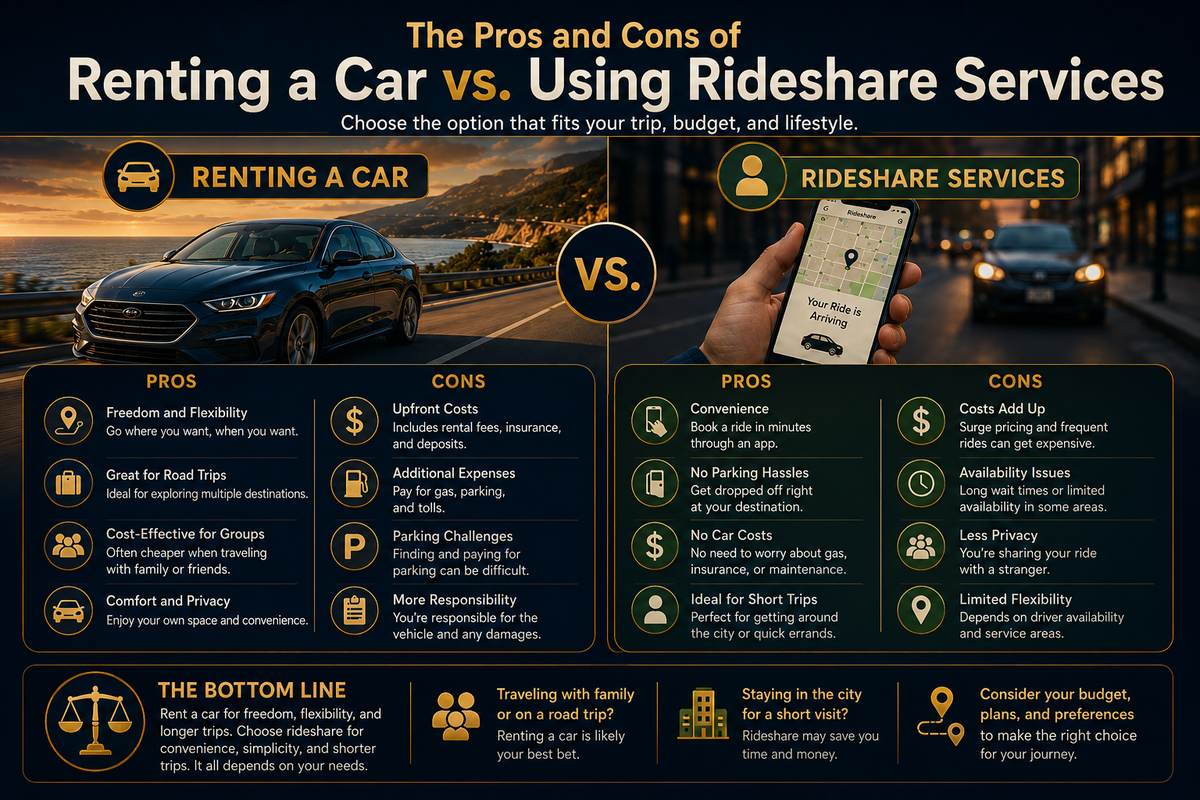
In today's world of transportation options, travelers often face a choice between renting a car and relying on rideshare services like Uber or Lyft. Both have their merits, and the best option depends on your specific situation.
Renting a car gives you complete freedom and flexibility. You can go wherever you want, whenever you want, without waiting for a driver or worrying about surge pricing. For trips that involve multiple stops, rural areas, or destinations with limited public transport, a rental car is often the clear winner.
When Rideshare Makes Sense
Rideshare services excel in dense urban environments where parking is expensive and traffic is heavy. If your trip is primarily within a city center, you might save money and hassle by skipping the rental counter entirely. No parking fees, no fuel costs, and no navigating unfamiliar streets.
The true cost of transportation isn't just the price tag — it's the value of your time, comfort, and peace of mind. Consider all factors before making your choice.
However, rideshare costs can add up quickly over several days. A week of multiple daily rides can easily exceed the cost of a rental car. Additionally, in less populated areas, wait times can be long and availability uncertain. Always calculate the total expected cost for your trip duration before deciding.
- Rental cars offer unlimited trips and freedom for a fixed daily rate.
- Rideshares eliminate parking and navigation concerns in cities.
- For trips longer than 2-3 days, rentals are usually more economical.
- Consider insurance, fuel, and parking when comparing total costs.
- Rural and suburban destinations strongly favor rental cars.